
Wilder's Volatility System
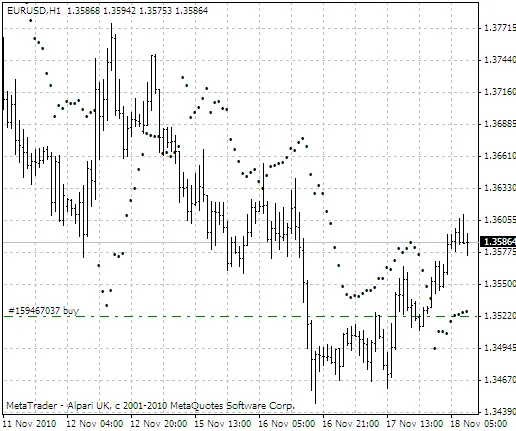
If you're looking to enhance your trading strategy, you might want to take a closer look at Wilder’s Volatility System. Developed by the legendary Welles Wilder, this system focuses on market volatility and helps traders gauge potential price movements.
What is the True Range?
At the heart of Wilder's Volatility System is the True Range, which is always a positive value. It’s calculated by taking the highest of three different price ranges: the current day's high minus the current day's low, the current day's high minus the previous day's close, and the current day's low minus the previous day's close. This approach ensures that even on days with minimal price movement, any significant shifts compared to the previous day are accurately reflected in the volatility measure.
Interpreting the Volatility System
Wilder’s Volatility System calculates a smoothed average of the True Range to determine overall market volatility. This indicator provides insights into price activity and directional movement, effectively showing how much a price fluctuates over time. By tracking the trend of volatility, you can see signs of increasing volatility when the trend line is rising, and decreasing volatility when it’s falling.
However, keep in mind that Wilder’s Volatility System on its own doesn’t give trade signals. To make the most of it, you should combine it with other indicators. A common pairing is the Volatility Breakout System, which uses the Average True Range (ATR) as a foundation. In this system, you might open a long position when the price rises above its normal fluctuation range and a short position when it dips below that range.
Why Use Wilder’s Volatility System?
This system is invaluable for traders looking to assess market risk and identify potential buy and sell opportunities. More volatile markets can present greater risk/reward scenarios, which some traders might embrace for the chance at higher profits. Others, however, may prefer to steer clear of high-risk situations. Understanding how to navigate this volatility is key to successful trading.
- Helps assess market volatility
- Indicates potential trading opportunities
- Pairs well with other trading systems for optimal results