
Author: MetaQuotes
Today, let’s dive into the Chaikin Volatility Indicator, a powerful tool that can help you gauge market movements.
As noted in S. Achelis's book, Technical Analysis from A to Z, there are two primary ways to interpret this volatility measure:
One approach suggests that market tops often come with heightened volatility, as traders become anxious and uncertain. Conversely, during the later stages of a market bottom, you might notice decreased volatility, indicating that traders are growing bored and losing interest.
Mr. Chaikin’s perspective is a bit different. He believes that a surge in the Volatility indicator over a short time frame signals that a market bottom is nearby—think of it as the aftermath of a panic sell-off. On the flip side, a drop in volatility over a more extended period can suggest that a market top is approaching, often seen in a mature bull market.
However, just like any seasoned trader will tell you, don’t put all your eggs in one basket! Mr. Chaikin advises combining this indicator with additional tools, such as a moving average penetration or a trading band system, for confirmation.
The Chaikin Volatility Indicator utilizes the SmoothAlgorithms.mqh library classes, which you’ll need to copy to your terminal's terminal_data_folder/MQL5/Include. You can find a detailed explanation of these classes in the article "Averaging Price Series for Intermediate Calculations Without Using Additional Buffers".
This indicator first made its debut in MQL4 and was published in CodeBase on February 8, 2007.
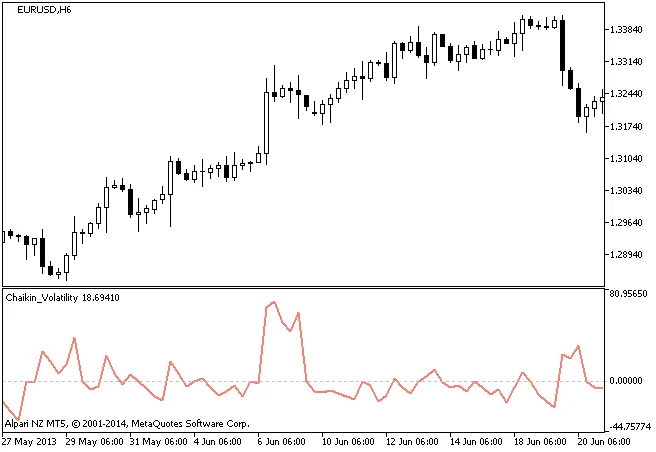
Fig.1. Chaikin Volatility Indicator
Related Posts
- Unlocking MetaCOT 2: Your Ultimate CFTC Indicator Toolkit for MT4
- Visualize Current Trends Across All Time Frames with This MetaTrader 4 Indicator
- Mastering the MACD Candle Indicator for MetaTrader 4
- Unlocking the Power of Master Tools for MetaTrader 4
- Hourly Buffers for Data Collection in MetaTrader 5: A Simple Guide