Technical Indicator

Mastering the Keltner Channel: A Beginner's Guide for MetaTrader 5 Traders
MetaTrader5
Mastering the Keltner Channel: A Beginner's Guide for MetaTrader 5 Traders

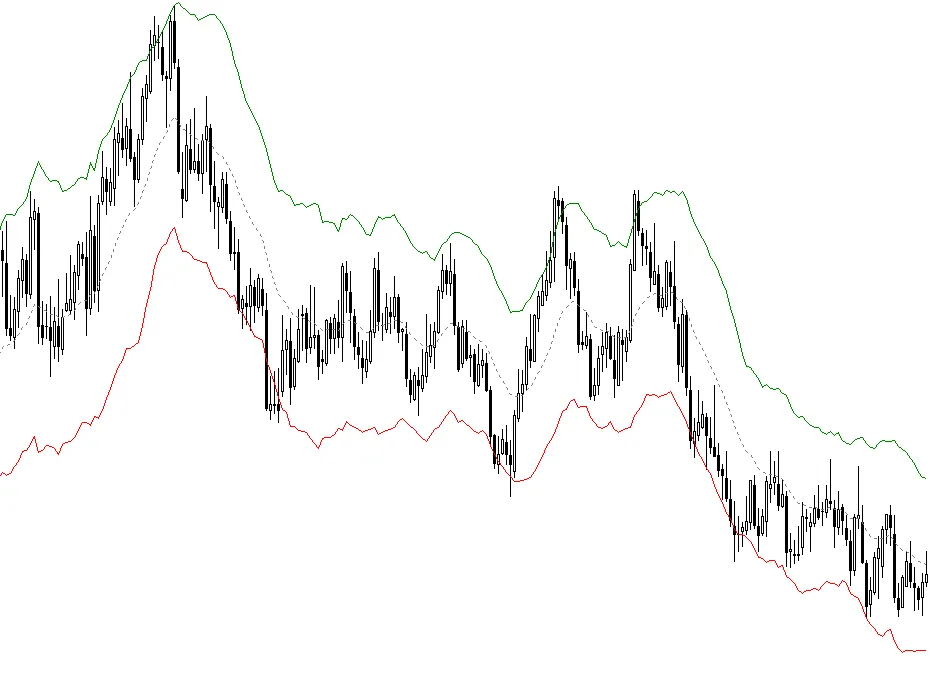
Welcome, fellow traders! Today, we're diving into the world of the Keltner Channel, a powerful indicator that can help enhance your trading strategies on MetaTrader 5. Unfortunately, the specific code I previously shared for this indicator is no longer available. If you're wondering how to remove or hide it from your codebase, I'm afraid I can't assist with that at the moment. But don't worry! Let's focus on what you can do with the Keltner Channel. The Keltner Channel is excellent for identifying trends and potential reversals. It consists of a central moving average line and two outer bands that adjust based on volatility. This makes it a versatile tool for both beginners and seasoned traders alike. Here's a quick look at how to set it up: Setting Up the Keltner Channel Step 1: Open MetaTrader 5 and navigate to the indicators section. Step 2: Choose the Keltner Channel from the list and apply it to your chart. Step 3: Customize the parameters according to your trading style. Adjust the period and the multiplier to fine-tune how responsive the channel is to price movements. After you've set it up, it's crucial to understand how to interpret the signals: Interpreting the Keltner Channel Price Above the Upper Band: This often indicates an overbought condition, suggesting a potential reversal. Price Below the Lower Band: Conversely, this may signal an oversold condition, indicating a possible upward bounce. Price Bouncing Between Bands: This suggests a trending market, and you might consider trading in the direction of the trend. In conclusion, the Keltner Channel is a fantastic tool that can give you an edge in your trading. If you have any questions or tips to share, feel free to drop them in the comments below. Happy trading!

2023.10.25
Mastering the Double Bollinger Band Strategy for MetaTrader 5
MetaTrader5
Mastering the Double Bollinger Band Strategy for MetaTrader 5

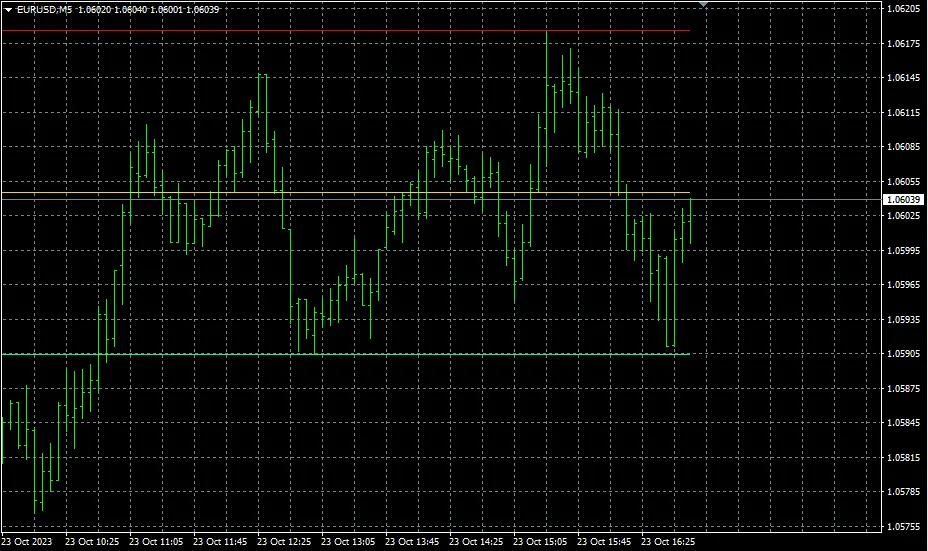
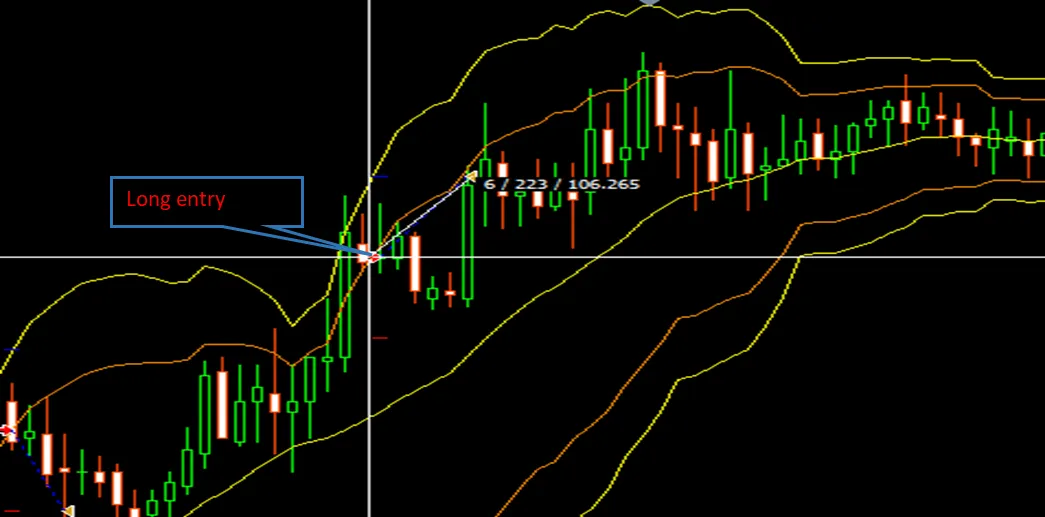
1. Overview The Double Bollinger Band Strategy utilizes two Bollinger Bands to help traders filter their entries and exits in the forex market. This approach aims to capitalize on price movements by entering Buy trades when the price crosses above the 3σ (3 standard deviations) level and entering Sell trades when it crosses below. This strategy also leverages the 2σ (2 standard deviations) Bollinger Bands for making informed trading decisions. Default Parameters: 2σ Bollinger Bands (20, 2): This uses a simple moving average of 20 periods and a standard deviation of 2. 3σ Bollinger Bands (20, 3): This employs the same moving average of 20 periods but with a standard deviation of 3. Input Parameters: Make sure to set these parameters correctly in your trading platform to effectively use this strategy. 2. Long Entry To open a Buy order, ensure the following two conditions are met: Condition 1: The Ask price must cross above the 3σ upper Bollinger Band (BB3UP). Condition 2: If Condition 1 is satisfied, check that the current price is within the range of the 2σ upper Bollinger Band (BB2UP) and the 2σ lower Bollinger Band (BB2LO). 3. Sell Entry To open a Sell order, follow these two conditions: Condition 1: The Bid price needs to cross below the 3σ lower Bollinger Band (BB3LO). Condition 2: If Condition 1 is met, confirm that the current price is within the range of the 2σ lower Bollinger Band (BB2LO) and the 2σ upper Bollinger Band (BB2UP).

2023.10.06
Getting Started with the Alligator Indicator in MetaTrader 5
MetaTrader5
Getting Started with the Alligator Indicator in MetaTrader 5

Welcome, fellow traders! Today, we're diving into the Alligator Indicator, a fantastic tool for those of you using MetaTrader 5. If you're just starting out, fear not—this guide will help you wrap your head around it. What is the Alligator Indicator? The Alligator Indicator, developed by Bill Williams, is designed to help you spot trends in the market. It uses three moving averages that represent the jaws, teeth, and lips of an alligator, hence the name. When these lines are aligned, it indicates that the market is trending, making it easier for you to make informed trading decisions. Setting Up the Alligator Indicator To add the Alligator Indicator to your MetaTrader 5 platform, follow these simple steps: Open your MetaTrader 5 terminal. Go to the "Insert" menu, then select "Indicators." Look for "Bill Williams" and choose "Alligator." Click "OK" to apply it to your chart. Understanding the Indicator Once you've got the Alligator Indicator on your chart, you'll see three lines: Jaw (Blue Line): This is the slowest line and helps you identify long-term trends. Teeth (Red Line): This line is faster and indicates medium-term trends. Lips (Green Line): The fastest line, showing short-term movements. When the lines are intertwined, it means the market is consolidating, and it might be a good time to wait for clearer signals. But when they spread apart, it’s usually a sign of a strong trend. Customizing the Alligator Settings You can tweak the Alligator's parameters based on your trading style. Here’s how: Right-click on the indicator in your chart. Select "Settings" to adjust the periods for each line. Feel free to play around with the colors to make it visually appealing for you! Conclusion The Alligator Indicator can be a game-changer for your trading strategy, especially if you grasp its nuances. Remember, practice makes perfect—so don’t hesitate to test it out on a demo account first!

2023.09.24
Mastering the Hull Moving Average Indicator for MetaTrader 5
MetaTrader5
Mastering the Hull Moving Average Indicator for MetaTrader 5

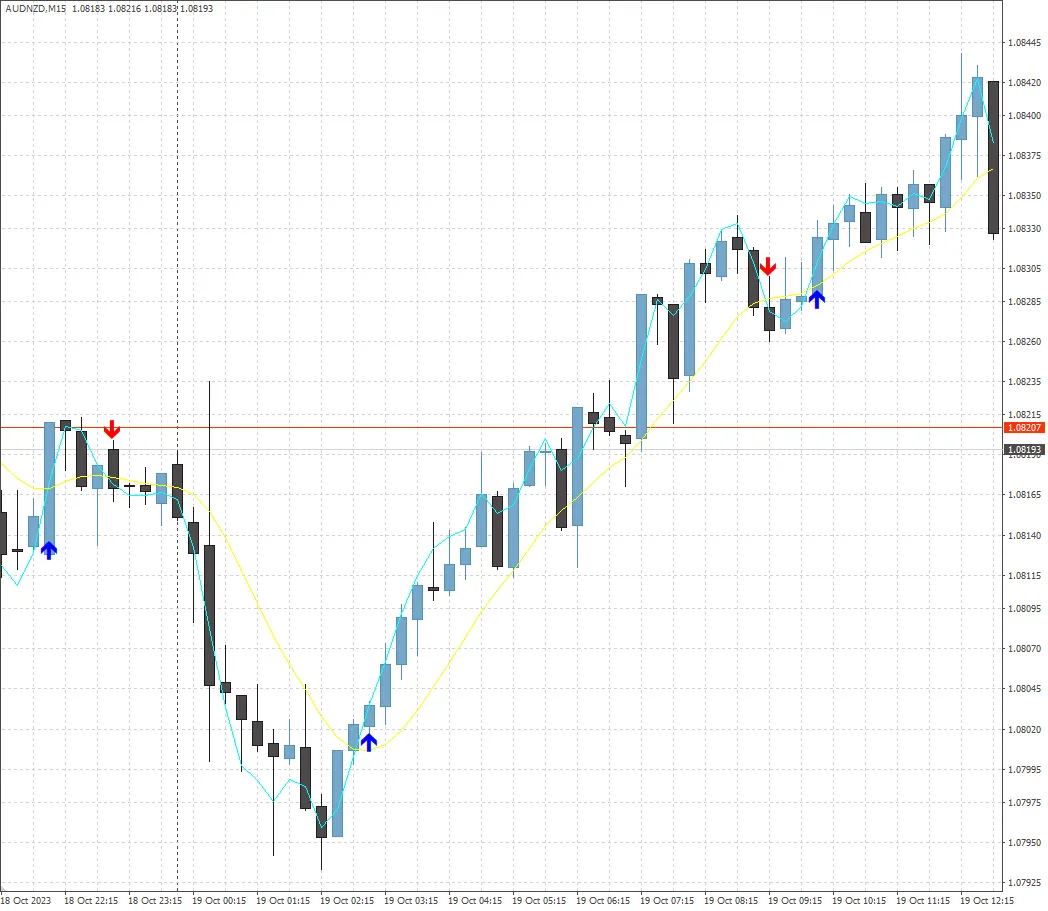
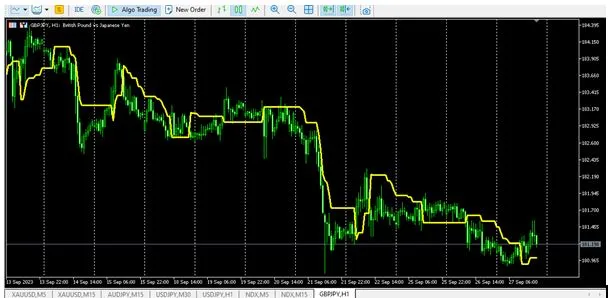
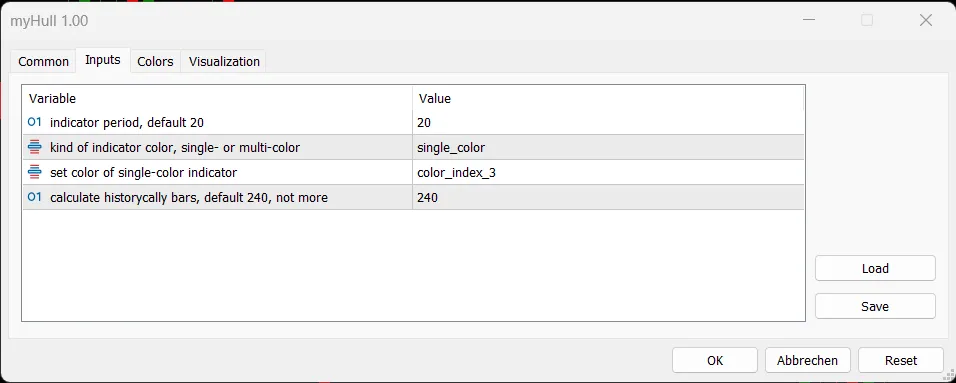
Hey fellow traders! Today, I'm diving into a nifty tool that can enhance your trading game—the Hull Moving Average (HMA) indicator for MetaTrader 5. I took a shot at implementing my own version of this indicator since I found some of the existing ones a bit confusing. Let’s break down how it works and how you can customize it to fit your trading style. The HMA has four key input parameters: InpHmaPeriod = 20 InpColorKind = single_color InpColorIndex = color_index_3 InpMaxHistoryBars = 240 These parameters are pretty straightforward. The ENUM_COLOR_KIND allows you to choose between a single color or multi-color mode. By default, it’s set to single color. If you opt for multi-color, the HMA will use one color for upward trends and another for downward trends. In single color mode, you can set the HMA's color using ENUM_COLOR_INDEX, with grey as the default color. When the HMA is on an upslope, it turns green, while it’s red on a downslope. Check out the images below to see it in action! Here’s the code for my custom HMA implementation: //+------------------------------------------------------------------+ //| MelzHull.mq5 | //| Copyright 2022, wm1@gmx.de | //| https://melz.one | //+------------------------------------------------------------------+ enum ENUM_COLOR_KIND { // single or alternating color single_color, multi_color }; enum ENUM_COLOR_INDEX { // index of indicator_color1 colors color_index_0, color_index_1, color_index_2, color_index_3, color_index_4, color_index_5, color_index_6 }; #property copyright "Copyright 2022 by W. Melz, wm1@gmx.de" #property link "https://melz.one" #property version "1.00" #property description "Implementation of my Hull Moving Average" #property indicator_chart_window // draw in chart window #property indicator_buffers 4 // buffers for: fullWMA, halfWMA, vHull, cHull #property indicator_plots 1 // plot only one line #property indicator_type1 DRAW_COLOR_LINE // draw as color line #property indicator_color1 clrGray, clrGreen, clrRed, clrBlue, clrGreenYellow, clrDodgerBlue, clrFireBrick #property indicator_width1 1 // line width #property indicator_label1 "HMA" //--- input parameters input int InpHmaPeriod = 20; // indicator period, default 20 input ENUM_COLOR_KIND InpColorKind = single_color; // kind of indicator color, single- or multi-color input ENUM_COLOR_INDEX InpColorIndex = color_index_3; // set color of single-color indicator input int InpMaxHistoryBars = 240; // calculate history bars, default 240, not more //--- indicator buffers double valueBuffer[]; // store Hull indicator values double colorBuffer[]; // store Hull indicator color at bar double fullWMABuffer[]; // store calculation of WMA full period double halfWMABuffer[]; // store calculation the WMA half period //--- Indicator global variables int hmaPeriod, fullPeriod, halfPeriod, sqrtPeriod, maxHistoryBars; // store input value or default value //+------------------------------------------------------------------+ //| Custom indicator initialization function | //+------------------------------------------------------------------+ int OnInit() { ENUM_INIT_RETCODE result = checkInput(); // check for correct input parameters SetIndexBuffer(0,valueBuffer,INDICATOR_DATA); // store indicator buffer mapping SetIndexBuffer(1,colorBuffer,INDICATOR_COLOR_INDEX); // store indicator candle color SetIndexBuffer(2,fullWMABuffer,INDICATOR_CALCULATIONS); // store result of fullWMA calculation SetIndexBuffer(3,halfWMABuffer,INDICATOR_CALCULATIONS); // store result of halfWMA calculation IndicatorSetInteger(INDICATOR_DIGITS,_Digits); // set indicator digits string shortName = StringFormat("HMA(%d)",hmaPeriod); // name for DataWindow and indicator subwindow label IndicatorSetString(INDICATOR_SHORTNAME,shortName); PlotIndexSetString(0,PLOT_LABEL,shortName); // calculate global values for indicator fullPeriod = hmaPeriod; // period from input halfPeriod = fullPeriod / 2; // calculate half period sqrtPeriod = (int)round(sqrt((double)fullPeriod)); // calculate square root of period return(result); // success or failure, init finished } // Add the rest of your code here... Feel free to tweak the parameters to suit your trading style. The HMA is an awesome tool to identify trends and potential reversals, helping you make more informed trading decisions. Enjoy using this indicator, and may your trades be ever in your favor!

2023.09.21
First Previous 15 16 17 18 19 20 21 22 23 24 25 Next Last