
The Kaufman Efficiency Ratio, often referred to as the KER, is a powerful tool that many traders use to gauge market efficiency. Developed by Perry Kaufman, this indicator is detailed in his renowned books, "Smarter Trading: Improving Performance in Changing Markets" and "New Trading Systems & Methods".
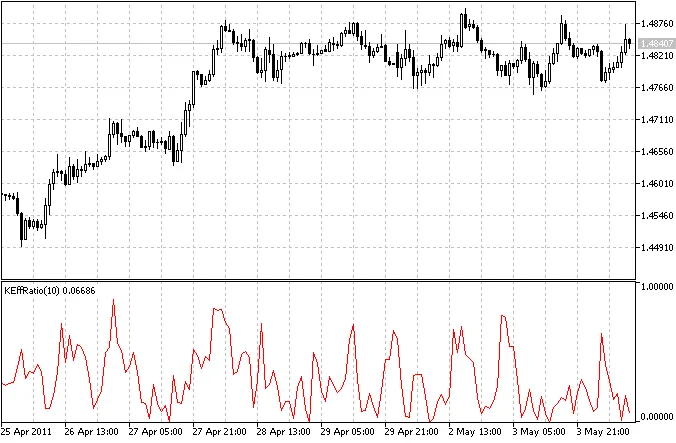
But what exactly does the Kaufman Efficiency Ratio do? In simple terms, it measures the market’s efficiency in terms of price movement. The KER evaluates how much price movement has occurred compared to the potential price movement. This can help you determine whether a market is trending efficiently or if it’s just a lot of noise.
- How It Works: The KER takes into account the actual price movement over a specified period and compares it to the theoretical maximum movement.
- Interpreting the Results: A higher ratio indicates a more efficient market, while a lower ratio suggests that the market is choppy and less predictable.
- Using KER in Trading: Traders often use KER to identify potential entry and exit points, helping to time their trades better.
Incorporating the Kaufman Efficiency Ratio into your trading strategy can provide valuable insights, particularly if you’re looking to catch trends early or avoid false signals in a turbulent market. So, whether you're a seasoned pro or just starting, understanding this indicator can give your trading a significant edge!
Related Posts
- Hourly Buffers for Data Collection in MetaTrader 5: A Simple Guide
- Mastering the MACD Candle Indicator for MetaTrader 4
- Unlocking the Power of Master Tools for MetaTrader 4
- Unlocking MetaCOT 2: Your Ultimate CFTC Indicator Toolkit for MT4
- Unlocking the Power of ColorJFatl_Digit_Alert: Your Go-To MT5 Indicator