
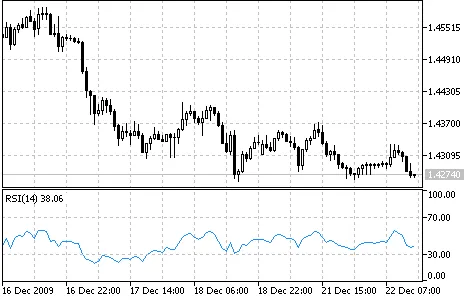
The Relative Strength Index (RSI) is a powerful tool for traders, acting as a price-following oscillator that moves between 0 and 100. When J. Welles Wilder first introduced this indicator, he suggested a 14-day period for RSI calculations. Over the years, shorter and longer periods like the 9-day and 25-day RSI have found their place in many traders' strategies.
One of the most effective ways to analyze the RSI is by spotting divergences. This happens when the security reaches a new high while the RSI fails to break its previous peak, signaling a potential reversal. When the RSI starts to decline and dips below its latest low, that's known as a "failure swing" and is often considered a confirmation of the anticipated reversal.
Here are some handy ways to leverage the Relative Strength Index in your chart analysis:
- Tops and Bottoms: Typically, the RSI peaks above 70 and bottoms below 30, often forming these critical points before the underlying price chart.
- Chart Patterns: The RSI can create chart patterns like head and shoulders or triangles, which may not be as apparent on the price chart itself.
- Failure Swings: This occurs when the RSI surpasses a previous high or drops below a recent low, signaling potential support or resistance breakouts.
- Support and Resistance Levels: The RSI often highlights support and resistance levels more clearly than the price action itself.
- Divergences: As mentioned earlier, divergences happen when the price makes a new high or low that isn't confirmed by the RSI, often leading to price corrections in line with the RSI's direction.
Calculation:
The formula for calculating the RSI is:
RSI = 100 - (100 / (1 + U / D))
where:
- U: the average of positive price changes;
- D: the average of negative price changes.




Comments 0