
The Double Exponential Moving Average (DEMA) is a powerful technical indicator that was created by Patrick Mulloy and first introduced in February 1994 in the "Technical Analysis of Stocks & Commodities" magazine. This indicator is particularly handy for smoothing out price series and is applied directly to the price chart of various financial securities. Plus, it can also be used to smooth values of other indicators.
One of the standout benefits of DEMA is its ability to filter out false signals that often occur in jagged price movements, allowing you to maintain your position during strong trends. This can be a game-changer for traders looking to capitalize on market momentum.
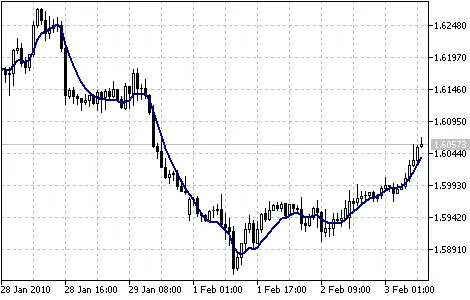
Double Exponential Moving Average Indicator
How DEMA is Calculated:
The DEMA is based on the Exponential Moving Average (EMA). To understand how it works, let’s take a look at the error of price deviation from the EMA value:
Where:
- err(i) - the current EMA error;
- Price(i) - the current price;
- EMA(Price, N, i) - the current EMA value of the price series over N periods.
Next, we add the value of the exponential average error to the value of the exponential moving average of the price:
= 2 * EMA(Price, N, i) - EMA(Price - EMA(Price, N, i), N, i) = 2 * EMA(Price, N, i) - EMA2(Price, N, i)
Where:
- EMA(err, N, i) - the current value of the exponential average of error err;
- EMA2(Price, N, i) - the current value of the double smoothing of prices.




Comments 0