
Understanding Arbitrage Trading
Arbitrage trading is a concept that doesn’t need much introduction. Essentially, it involves capitalizing on price discrepancies between different markets. In this piece, we’ll explore a strategy that’s similar to traditional arbitrage but focuses solely on exchange contracts.
The Strategy Simplified
Here’s the crux of the strategy:
- Buy Low: When prices dip, we buy more. The lower the price falls, the more we’re inclined to buy.
- Sell High: Conversely, when prices rise, we sell. The higher the price soars, the larger our selling volume.
This approach acts as a counter-trend strategy, yielding profits from market pullbacks, trend reversals, and even sideways movements. However, during strong trends, you might face equity losses.
Testing the Strategy
Take a look at the example below to grasp how this strategy plays out:
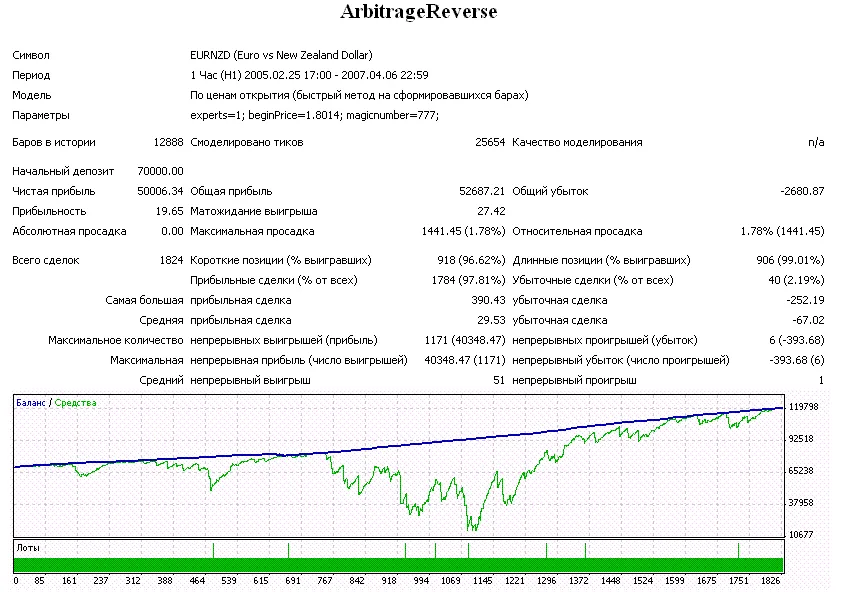
As traders, we often dream of achieving such impressive results. However, it’s crucial to keep equity in check. In tougher times, like during a margin call, this trading system's EA can utilize remaining funds to recover your balance, as proven in demo tests.
Advantages Over Traditional Methods
This strategy shines in its resilience compared to less effective methods like Martingale. While Martingale may promise linear profit increases, it also leads to exponential losses. On the other hand, our approach maintains a more stable risk profile, allowing traders to weather tough days without significant damage to their accounts.
Diversifying Your Approach
To further mitigate risk during downturns, consider deploying multiple EAs across different currency pairs. This diversification helps cushion equity declines. Additionally, the EA can group trades across different symbols with opposing trends. For instance, if one currency pair is trending up while another is trending down, the EAs will adjust accordingly, selling high on one and buying low on the other.
Currency Pair Considerations
It’s important to note that the inverse rates don’t have to be in the same currency. They can be in any currency as long as they share the same base currency. Here are a few examples:
- Inverse to Dollar: USDJPY, USDCHF, USDCAD, USDSGD, etc.
- Inverse to Euro: EURUSD, EURGBP, EURCHF, EURJPY, etc.
- Inverse to Pound: GBPUSD, GBPJPY, GBPCHF, GBPNZD, etc.
Always ensure that the contract sizes are uniform across pairs, typically set at 100,000 units per lot by most brokers.
Configuring Your EA
When setting up your EA, you’ll only need to adjust three non-optimizable parameters:
- Experts: This refers to the number of EAs in the inverse currency group. For instance, if you have three EAs for USDJPY, USDCHF, and USDCAD, set this to 3. Ensure all EAs have the same magic number for coherence.
- MagicNumber: This unique identifier helps differentiate between EA groups. Make sure no trades with the same magic number exist in your account history.
- BeginPrice: This is the initial bid price when the EA is activated. If testing with historical data, set the price at the start of your data range.
These parameters are fixed for each EA and won’t change during automated trading.
Final Thoughts
Remember, the testing quality isn’t crucial since the EA operates based on formed bars and current prices, rather than relying on technical indicators. If you’re itching to dive into testing, feel free to download M1 historical data and explore your strategies!




Comments 0